What Great Congress Support Actually Looks Like Behind the Scenes


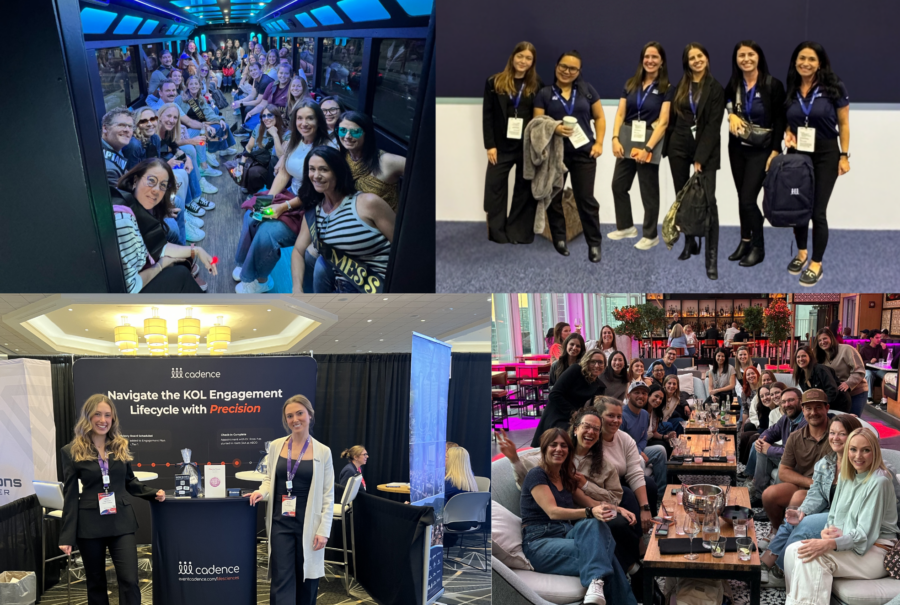
A successful medical congress can look surprisingly simple from the outside.
The right people arrive at the right meetings. Schedules stay current. Scientific leaders know where they need to be. Internal teams can see what is happening. Changes are handled without disrupting the entire day.
That simplicity is rarely accidental.
Behind a well-run congress is a significant amount of coordination: appointment outreach, calendars, meeting space, internal stakeholders, KOL and HCP schedules, reporting requirements, communications, last-minute changes, and countless decisions that have to happen quickly.
Technology can organize much of that complexity. But technology alone does not make the complexity disappear.
The difference often comes down to the people behind it.
Across conversations with members of the Event Cadence team, one idea surfaced repeatedly: great congress support is not simply about responding when someone asks for help. It is about understanding the customer’s operation well enough to anticipate what they will need, adapt when circumstances change, and quietly solve problems before they begin affecting the experience.
Support starts long before anyone arrives onsite
Congress execution may be the most visible part of the process, but the work starts months earlier.
New workflows need to be configured. Teams need to understand technology. Stakeholders have different requirements. Appointment lists evolve. Meeting rooms must be aligned with schedules. Outreach needs to account for the availability of internal teams and external experts.
That is why support cannot begin with a help desk ticket.
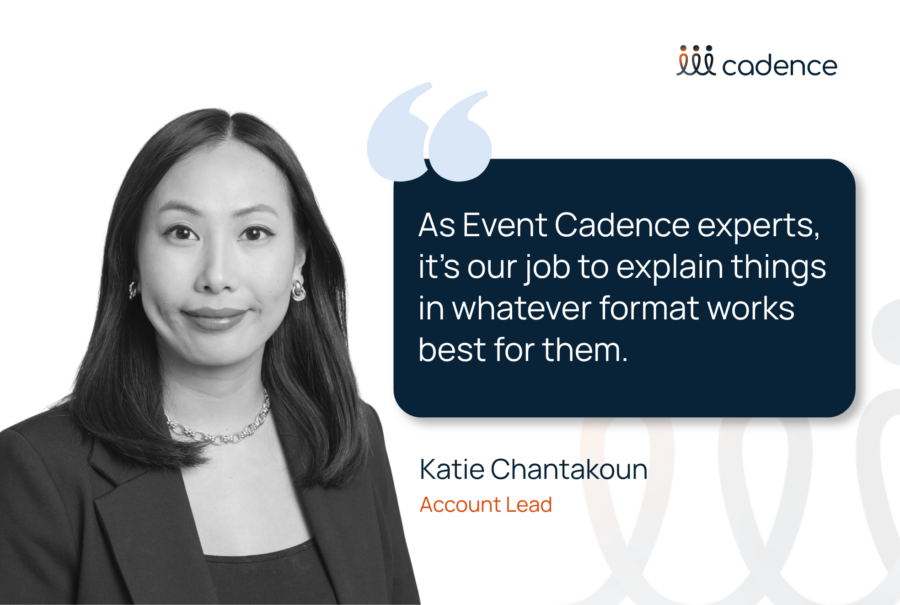
For Katie Koon, an Account Lead at Event Cadence, service is closely tied to how people learn and adopt new technology.
Clients do not all need the same kind of guidance, and effective support means meeting them with the format and level of help that works best.
That distinction becomes increasingly important as event programs grow more complex.
Good onboarding is not just training someone to click the right buttons. It means understanding how an organization currently operates, where the friction exists, and how much change its teams are ready to absorb.
Some organizations want their teams to manage nearly everything themselves. Others want support throughout planning and execution. Many sit somewhere in between.
There should not have to be one operating model for all of them.
The strongest service model adapts to the organization rather than requiring the organization to redesign itself around a platform.
The goal is not responsiveness. It is anticipation.
Fast answers matter during a congress.
But the highest level of service happens before the question needs to be asked.
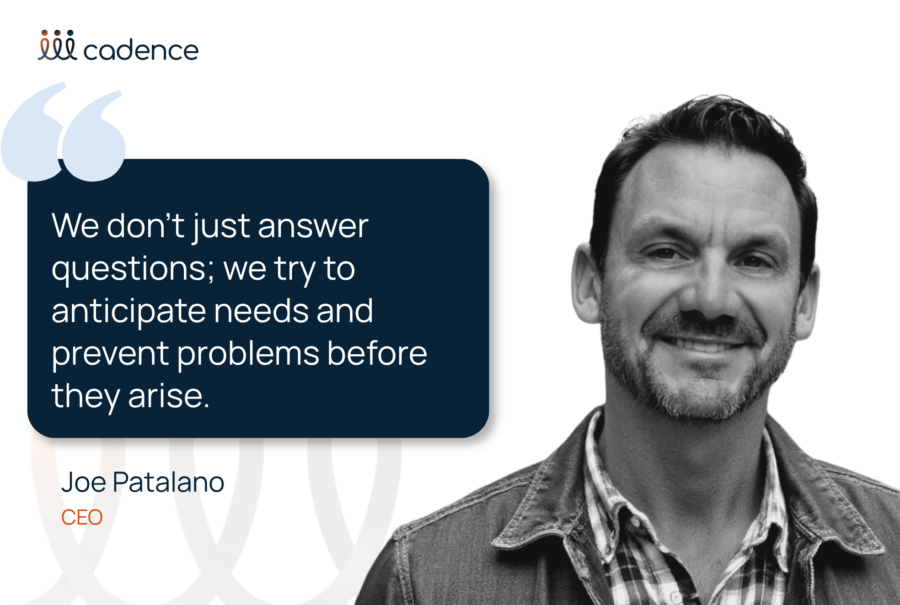
Event Cadence CEO and Co-Founder Joe describes the value simply: peace of mind.
That shift from reactive support to proactive support changes the role of the technology partner.
A reactive vendor waits for a request.
A strategic partner understands the workflow well enough to recognize where the risk is developing.
Is a meeting room becoming overbooked? Are two internal teams pursuing the same KOL? Has an attendee’s travel delay made the original appointment unrealistic? Is someone arriving onsite without registration? Does a stakeholder need a report formatted differently for an upcoming leadership discussion?
None of these situations is unusual during a major congress.
What matters is how quickly they are identified and whether resolving them creates more work for the customer.
The best support often becomes almost invisible. The client sees an updated schedule or a successful meeting. Behind that outcome may have been multiple conversations, calendar checks, room changes, outreach attempts, or internal coordination.
The experience feels simple precisely because someone else is managing the complexity.
Behind every seamless congress is a command center
Tiffany Cunningham, an Account Lead at Event Cadence, describes the team as operating like a command center behind the scenes.
That is a useful way to think about modern congress support.
The role is not simply to monitor software. It is to understand how all the moving pieces interact.
Appointment availability affects meeting rooms. Meeting-room availability affects scheduling. Scheduling affects communications. Communications affect attendance. Attendance affects reporting. And a last-minute change in one area can quickly ripple into several others.
For clients, the goal is not to become experts in managing those dependencies. Their focus should remain on their scientific objectives, their stakeholders, and the conversations they came to the congress to have.
The support team helps absorb the operational noise surrounding those moments.
Sometimes that requires sophisticated workflow design.
Sometimes it is remarkably human.
At one large congress in Berlin, Account Lead Elizabeth Marin found that HCPs and KOLs were struggling to navigate the venue. Some meeting rooms were roughly a 15-minute walk from registration.
So she walked people there.
No automation eliminates every real-world challenge. Good service recognizes when technology is the answer and when somebody simply needs to step in and help.
Flexibility matters because no two organizations operate the same way
Even within the same company, different teams can approach congress engagement very differently.
Their metrics may differ. Approval processes may differ. Their terminology, branding, outreach strategies, and internal responsibilities may differ.
That makes rigid service models difficult to scale.
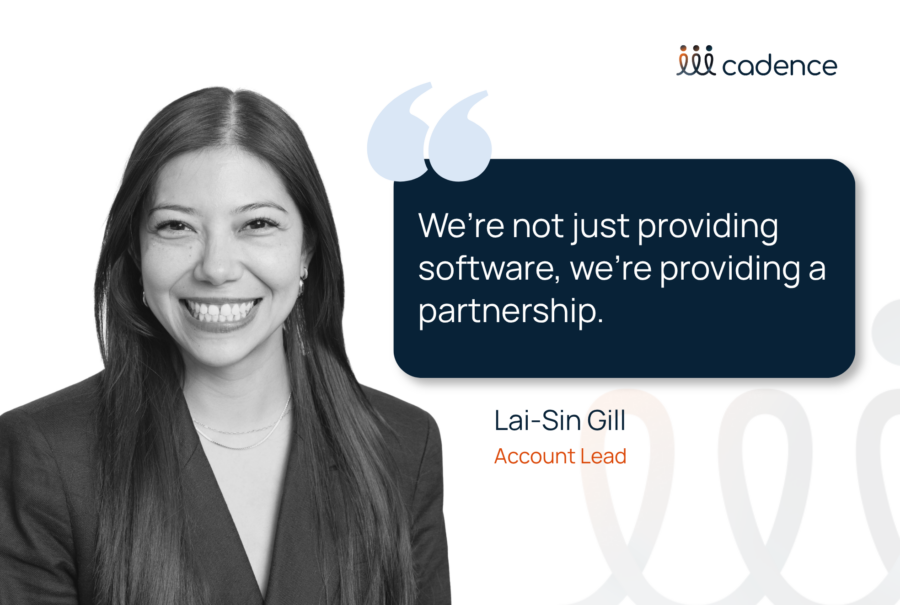
Lai-Sin Gi, an Account Lead at Event Cadence, describes the approach as meeting clients where they are.
That partnership becomes particularly valuable when circumstances move outside the original plan.
During one congress, Lai-Sin’s team overheard a client request that another vendor could not accommodate because it arrived during the weekend. Although the request had not originally been directed to Event Cadence, the team worked with the vendor and the client’s team to configure what was needed before the event opened.
The importance of that story is not that every technology provider should take over another vendor’s responsibilities.
It is that complex events rarely respect clean organizational boundaries.
Success often requires collaboration, judgment, and willingness to solve the actual problem instead of asking whose problem it technically is.
Expertise should make the next congress better too
Service should not end when the final meeting finishes.
What happens during one congress should improve how the next one is planned.
That requires more than handing over a data export.
Teams need help understanding what the information means.
Which meeting rooms were actually used? Where was capacity constrained? Which engagement requests overlapped across teams? What patterns emerged from invitations, attendance, or cancellations? What should change next time?
Arielle Smith, President of Life Sciences at Event Cadence, describes the account team as an advocate for the customer, including when reporting and product development are involved.
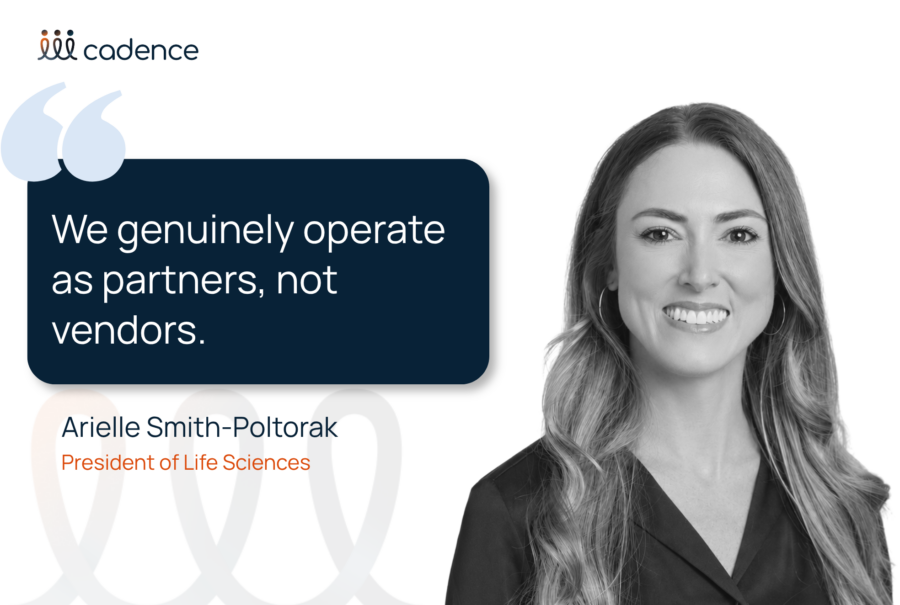
That advocacy extends internally.
Client-facing teams regularly bring customer needs and enhancement requests back to Product and Development. Patterns seen across accounts can become workflow improvements or new functionality.
In that sense, service creates a feedback loop.
The team learns from the customer. The platform evolves from what the team learns. And customers benefit from a product informed by the realities of actual congress execution.
Technology should remove work. People should remove uncertainty.
Medical congresses will remain complex.
There will always be competing calendars, crowded venues, shifting schedules, last-minute requests, different internal priorities, and unexpected changes.
The goal should not be to pretend that complexity can be eliminated.
The better goal is to make it manageable.
Technology can centralize information, automate scheduling, improve visibility, and reduce manual work. Expert services add something different: context, judgment, experience, anticipation, and accountability.
When those two pieces work together, teams spend less time managing the machinery around congress engagement and more time focused on the engagements themselves.
That may be the clearest definition of great congress support.
Not simply being available when something goes wrong.
Building the systems, relationships, and expertise that help more things go right in the first place.
About Event Cadence
Event Cadence is the full-service solution for events, meetings, and engagements, powered by technology and elevated through expert services. We help organizations streamline planning, stay aligned across teams, and prove impact across medical congresses, KOL and HCP engagements, strategic meetings, and other complex event programs.