What’s Changing in KOL Engagement? Insights from TLL Summit 2026


From cross-functional collaboration to measuring meaningful impact, here’s what we learned about the evolving future of KOL engagement.
The 7th Annual TLL Engagement Summit brought life sciences professionals together in Philadelphia on October 13–14 to explore the evolving role of Thought Leader Liaisons (TLLs) and the challenges shaping KOL engagement.
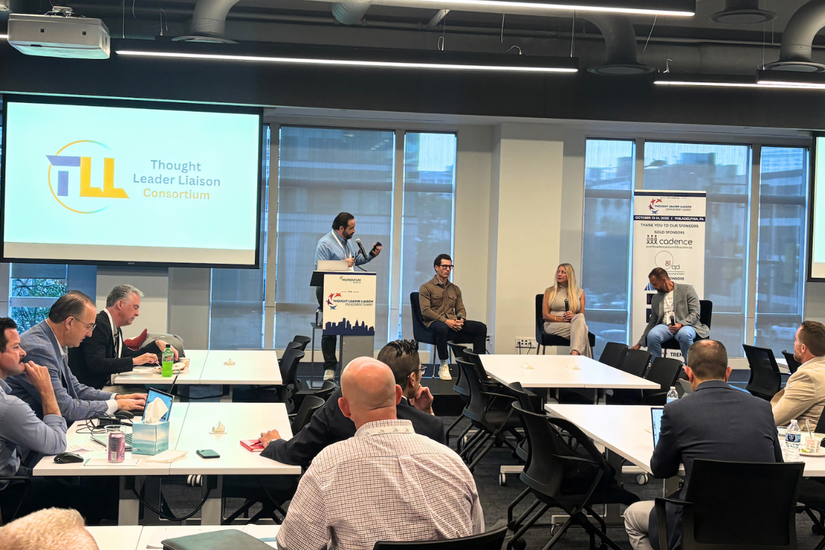
As a Gold Sponsor, Event Cadence had the opportunity to connect with industry leaders, exchange perspectives, and lead a session alongside Johnson & Johnson on a challenge we see across medical congresses and beyond: maintaining continuity throughout the KOL engagement journey.
Across two days of discussions, one theme stood out: the industry is shifting its focus from the volume of KOL interactions to the quality, coordination, and measurable impact of those engagements.
Taking the Stage: The Connected KOL Journey
As part of the summit, Event Cadence hosted an interactive session, The Connected KOL Journey: Where Does Continuity Break Down?, alongside Ana Canchola Mendez of Johnson & Johnson.
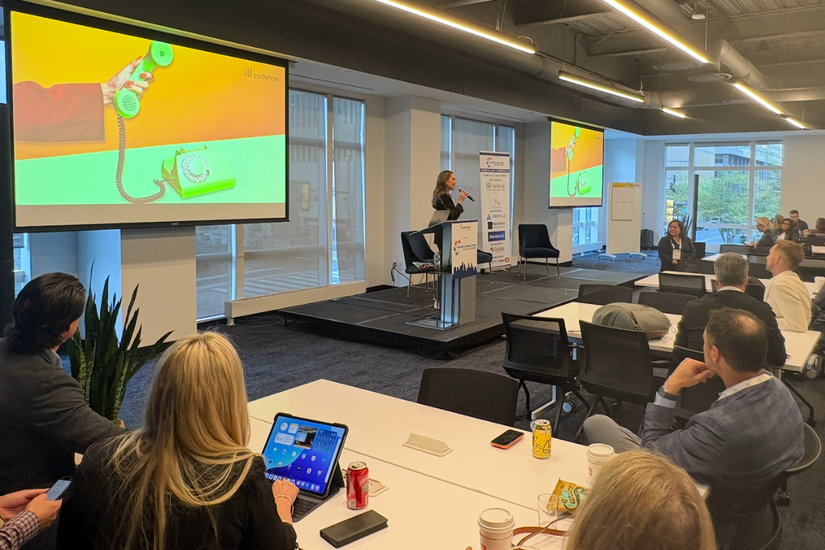
Together, we walked attendees through four key phases of KOL engagement: Strategize, Outreach, Execution, and Impact, exploring where information and context can get lost as relationships move between teams, meetings, and congresses.
The session sparked thoughtful discussion around familiar challenges, from disconnected planning and duplicate outreach to capturing outcomes that inform future interactions.
What stood out most was how closely these conversations aligned with themes raised throughout the summit. Across organizations, the need for greater visibility, stronger coordination, and continuity in KOL relationships was a recurring priority.
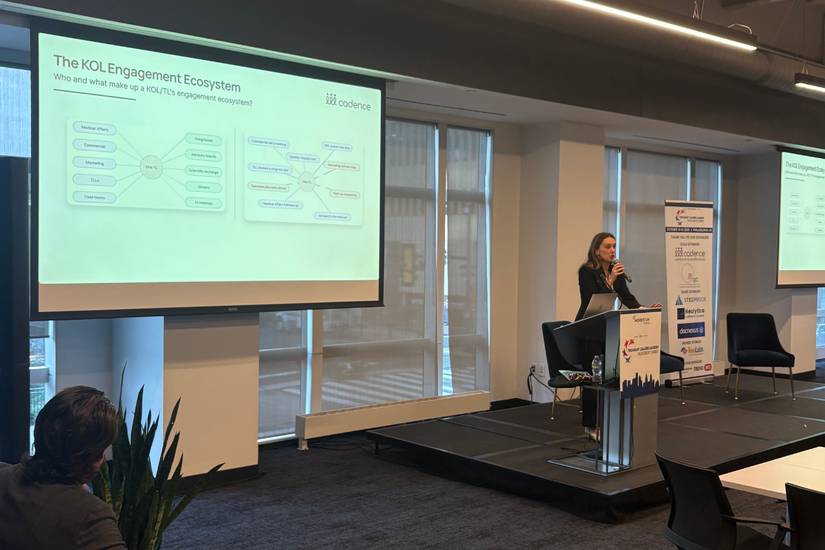
That shared perspective carried through the rest of the event. Here are five key takeaways from the conversations and sessions we attended.
1. Measuring KOL Engagement Is Moving Beyond Activity
For years, the success of congress engagement has often been measured through familiar metrics: meetings scheduled, interactions completed, and insights collected.
While those numbers remain valuable, they don’t necessarily tell the full story.
During a session on congress planning and strategy, speakers challenged attendees to think beyond activity-based reporting and consider what their organizations actually learned from a congress.
Did conversations challenge existing assumptions? Does new insights emerge? Did those insights influence decisions or change the direction of future engagement?
This represents an important evolution in how teams define success.
Rather than beginning congress planning with a meeting schedule alone, organizations can benefit from establishing clear learning objectives beforehand and evaluating outcomes against those objectives afterward.
The takeaway: The value of a congress isn’t simply how many meetings took place. It’s what those meetings helped the organization understand, decide, or do differently.
2. Cross-Functional Alignment Remains a Major Challenge
KOL engagement rarely happens within a single department. Thought Leader Liaisons, Medical Affairs, Commercial, and other teams may all engage the same individuals, often with different objectives and responsibilities.
Without sufficient visibility across these teams, even well-intentioned outreach can become fragmented.
Several summit discussions highlighted the consequences of disconnected planning, including duplicate outreach, unclear ownership, and KOL fatigue.
The challenge isn’t necessarily a lack of communication. It’s the absence of a shared understanding of the relationship.
Who has already engaged this KOL? What was discussed? Is another meeting planned? What follow-up is outstanding?
These questions become particularly important during major medical congresses, when engagement activity increases significantly and multiple teams are operating simultaneously.
Cross-functional alignment doesn’t mean eliminating necessary boundaries between Medical and Commercial. It means giving teams the appropriate visibility and context to coordinate their efforts while respecting those boundaries.
The takeaway: A more coordinated internal approach creates a more thoughtful and consistent experience for the KOL.
3. The KOL Journey Needs Continuity, Not Just Coordination
One of the recurring themes throughout the summit was the importance of looking at KOL engagement as an ongoing relationship rather than a series of individual interactions.
A meeting may be successful in the moment, but its long-term value depends on what happens next.
Does the next team have the necessary context? Are outstanding questions being addressed? Are insights from previous conversations influencing future engagement strategies?
Without continuity, organizations risk repeating conversations, overlooking important information, or missing opportunities to strengthen relationships.
Maintaining that continuity requires more than a shared calendar or meeting history. It requires a connected approach to planning, execution, and follow-through, with clear ownership and appropriate visibility across teams.
The takeaway: Every KOL interaction should build on the last, creating a more informed and intentional engagement journey.
4. Turning Insights Into Action Is Just as Important as Collecting Them
Pharmaceutical organizations collect valuable information through advisory boards, medical congresses, speaker programs, and individual KOL interactions.
But collecting insights is only the beginning.
Throughout the summit, speakers emphasized the difficulty of connecting information across systems, departments, and engagement activities.
When insights remain isolated in meeting notes, spreadsheets, or separate platforms, teams can struggle to translate them into meaningful next steps.
One discussion emphasized the importance of assigning clear ownership to questions raised during KOL interactions and ensuring the original team knows when those questions have been addressed.
That follow-through matters.
A KOL relationship can span multiple teams, events, and years. Without a reliable way to preserve context and track outcomes, organizations risk losing valuable information between interactions.
The conversation also extended to tracking changes in KOL sentiment over time, particularly from one medical congress to the next. Rather than evaluating each interaction independently, teams are increasingly looking for ways to understand how relationships and perspectives evolve.
The takeaway: The next opportunity for KOL engagement isn’t simply collecting more data. It’s connecting existing information and making it actionable.
5. AI Is Advancing, but Data Quality and Compliance Come First
Unsurprisingly, artificial intelligence was a recurring topic throughout the summit.
From preparing for KOL meetings to summarizing insights and identifying engagement trends, attendees explored how AI could reduce administrative work and help teams make better use of information.
However, the conversation wasn’t solely about what AI can do.
Speakers consistently emphasized the importance of approved tools, reliable source information, human oversight, and early involvement from legal and compliance teams.
In a highly regulated industry, the usefulness of AI depends on the quality and governance of the information behind it.
That makes structured, accurate engagement records increasingly important.
As organizations explore AI-powered workflows, the ability to connect meeting history, engagement context, and outcomes across systems will become even more valuable.
The takeaway: AI has significant potential to support KOL engagement, but its effectiveness depends on trustworthy data, appropriate governance, and human judgment.
Looking Ahead: A More Connected Approach to KOL Engagement
If there was one message we took away from the 2026 TLL Engagement Summit, it was that the expectations surrounding KOL engagement are evolving.
Teams are being asked to demonstrate greater impact, collaborate more effectively, preserve relationship context, and turn interactions into meaningful intelligence.
These conversations closely reflect what we see in our work with life sciences organizations at Event Cadence.
Technology plays an important role in bringing visibility to complex engagement activities, but the larger objective is to help teams work more strategically and ensure valuable information doesn’t get lost between interactions.
We’re grateful to the TLL Summit organizers, speakers, and attendees for two days of thoughtful discussions, and to Ana Canchola Mendez of Johnson & Johnson for joining us in exploring the connected KOL journey.
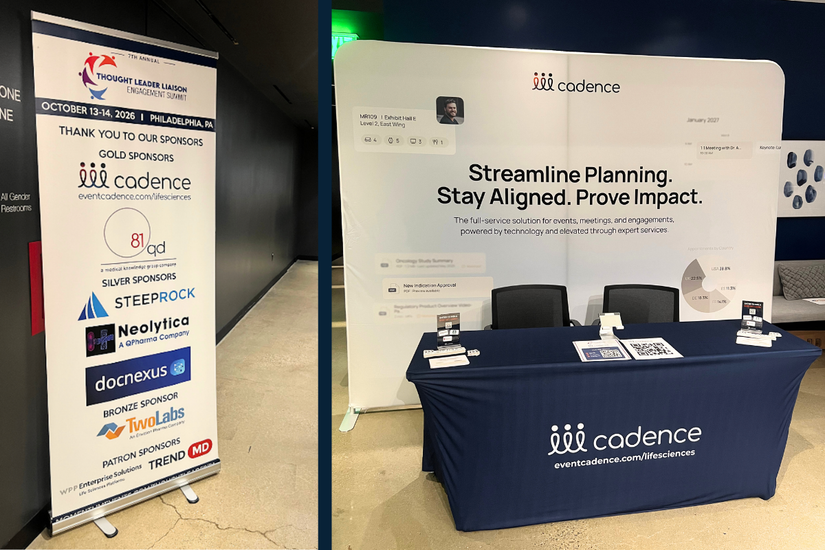
We look forward to continuing these conversations as the industry works toward a more connected, intentional, and measurable approach to KOL engagement.
Learn more about how Event Cadence supports coordinated KOL engagement and medical congress management.