5 Ways to Transform Your Pharma Congress Strategy into a Year-Round Engine for Scientific Leadership


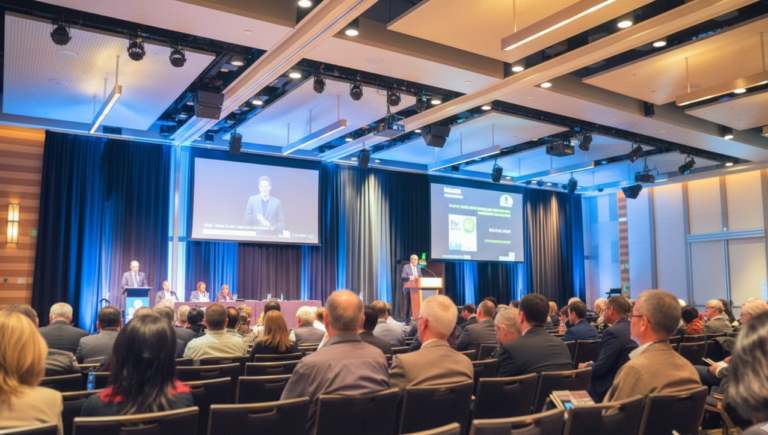
For many Life Sciences teams, a medical congress can begin to feel cyclical. Months of preparation lead to three intense days onsite, followed almost immediately by planning for the next event. Badge scans accumulate, presentations are archived, and teams move on without fully capitalizing on the strategic value of the moment.
At Event Cadence, we believe a congress should not be treated as a standalone event. It should serve as a strategic milestone that fuels scientific leadership, strengthens key relationships, and advances business objectives throughout the year.
Here are five ways leading organizations are transforming their congress strategy into a sustained engine for impact.
1. Shift From Event Planning to Lifecycle Strategy
The most meaningful shift we are seeing across the industry is not technological. It is strategic.
High-performing organizations are moving beyond the traditional three-day exhibit mindset and adopting what we call an Integrated Lifecycle Milestone approach. In this model, the congress becomes the centerpiece of a broader, year-long arc that aligns Medical Affairs, Commercial, and Clinical teams around shared objectives.
This approach includes three connected phases:
Pre-Event Alignment (12 to 18 Months Out)
Define success early. Whether the goal is validating oncology trends, expanding regional KOL networks, or generating evidence insights, measurable objectives should be established before logistics begin.
During-Event Execution
Move beyond passive presence. Every meeting, session, and interaction should be intentional and aligned to clearly defined strategic priorities.
Post-Event Activation
Translate insights into action. Synthesized learnings should inform campaigns, publications, advisory strategies, and engagement planning for the months ahead.
Congresses are not isolated logistical moments. They are high-impact milestones within the broader product lifecycle and evidence generation continuum.
2. Redefine ROI as Return on Intelligence
Most organizations track activity metrics such as badge scans, slide presentations delivered, and booth traffic. Yet very few believe those metrics truly capture the value of their investment.
The gap lies in how success is defined.
Return on Intelligence focuses on the quality of insights gained, the strength of relationships built, and the decisions accelerated as a result of engagement. It shifts the emphasis from volume to value.
Leading teams evaluate impact across four dimensions:
- Engagement: Depth of interaction and unmet needs identified
- Efficiency: Streamlined coordination and scheduling across teams
- Impact: Accelerated decision-making and strengthened regulatory alignment
- Reach: Amplification of live content into enduring digital assets
When congresses are structured around intelligence capture and strategic continuity, their value compounds well beyond the event itself.
3. Expand Influence with a Tiered Expert Engagement Strategy
Many Medical Affairs teams find themselves engaging the same small group of well-known experts at every congress. While these relationships are critical, over-reliance on a limited circle restricts reach and influence.
A more sophisticated engagement model includes three tiers:
1st Tier: Global and National Influencers
Guideline authors and principal investigators who shape the scientific narrative.
2nd Tier: Regional Experts
Trusted validators who bridge global strategy with local clinical practice.
3rd Tier: Community and Emerging Leaders
Influential voices who drive real-world adoption and peer-to-peer education.
Expanding engagement across these tiers increases network diversity, strengthens credibility, and ensures scientific messaging resonates across broader medical communities.
A structured, data-driven approach to KOL engagement enables teams to identify gaps, avoid overlap, and build relationships that extend beyond familiar circles.

4. Remove Operational Friction to Elevate Human Connection
Scientific exchange is at the heart of every successful congress strategy. Yet operational complexity often distracts teams from focusing on meaningful engagement.
When scheduling, room coordination, materials distribution, and communication are fragmented across tools, valuable time and energy are lost.
A centralized congress engagement platform enables:
- Integrated scheduling with real-time availability visibility
- Intelligent badge scanning tied directly to CRM systems
- Shared access to customer engagement history
- Real-time reporting and analytics for immediate insight
By reducing manual coordination and improving visibility across teams, organizations can redirect their focus toward high-value conversations that move science forward.
5. Build a 365-Day Engine for Scientific Leadership
Therapeutic areas are increasingly competitive. The organizations that lead are not necessarily those with the most data, but those who translate insight into sustained engagement.
A medical congress should serve as a catalyst, not a conclusion.
When strategy extends before, during, and long after the event, congress participation becomes part of a continuous engagement engine. Insights inform advisory boards. Relationships strengthen through ongoing touchpoints. Content evolves into educational assets. Teams operate with shared visibility and aligned objectives.
This is how scientific leadership is built.
Whether preparing for a major global congress or a focused therapeutic meeting, the opportunity is the same: transform episodic planning into strategic continuity.
Ready to elevate your congress strategy?
Connect with our team to explore how Event Cadence can help you streamline operations, deepen engagement, and turn your next congress into a defining strategic milestone.
Your success is our success.
About Event Cadence
Event Cadence helps organizations turn medical congresses into strategic, year-round engagement engines. By streamlining operations, capturing insights, and enabling continuous KOL engagement, it empowers teams to strengthen relationships, drive scientific impact, and build lasting leadership beyond the event.